Sporteyes Blog Posts


Football and Fall
As September approaches, the weather begins to cool, the leaves begin to change color, and football kicks into high gear. Every Fall, thousands of players begin a new season from Pee Wee to the NFL and every level in between. Being a high-contact sport, football is rated at a moderate level for eye injuries. Yet only a very small percentage of players wear eye protection. Why? Most sports goggles are not designed for use while wearing a helmet. At Sight for Sports Eyes, we have the answer. We have many options to choose from that are helmet-compatible, durable, and ASTM-rated. 2 of our best options are: Hilco Leader ASTM Rated Sports Goggles Protection from eye injuries Helmet compatible 5- Star Customer Reviews Liberty Sport F8 Helmet Spex ASTM Sports Glasses Meets or exceeds ASTM F803 Impact Resistance 6 base lens curve for a wider range of prescription lenses Helmet compatible Get the protection you need for this season today!
Learn more
The Ultimate Guide To Actually Understanding Your Eye Prescription
You will be able to buy your favorite glasses and googles with utmost confidence after reading this thorough breakdown of all the technical terms on your eye prescription. Reading Time: 10 minutes If you’re in a rush, click one of the titles below now to get the exact information that you need: What is a Prescription? What are OD and OS? What is a Pupillary Distance (PD)? What is a Sphere (SPH)? What are Cylinder (CYL) & Axis? What is Prism? Let’s start with the basics… ? Example of a standard eye prescription. Eye prescriptions reflect the eye measurements needed to build bespoke corrective lenses to fit your vision. Lens manufacturers use your eye prescription, written by eye doctors, to make lenses that correct deficiencies in your eyesight. You’ll struggle to see through a friend’s prescription glasses – especially if they have very bad eyesight – because it was made for them, not you. 1A. WHERE DOES THE EYE PRESCRIPTION COME FROM? The measurements displayed on an eye prescription are taken from a prior eye examination performed by your eye doctor (also called an orthoptist, optometrist, optician, or ophthalmologist) Standard eye examinations consist of numerous tests performed by your ophthalmologist to gain a general assessment of your vision and the health of your eyes. Everyone is encouraged to have regular eye exams to help avoid eye diseases and vision loss. Eye exams can test your visual acuity, pupil function, extraocular muscle motility, visual fields, intraocular pressure, and ophthalmoscopy through a dilated pupil. Only half of the estimated 61 million American adults deemed at high risk for vision loss have visited an eye doctor in the past 12 months, according to the Centers for Disease Control and Prevention (CDC). ? The O.D. and O.S. categories are highlighted in yellow. O.D.is your right eye, and O.S.is your left eye. Both are Latin abbreviations; O.D. means ‘Oculus Dexter’ and O.S. stands for ‘Oculus Sinister’. Usually, O.D. and O.S. will appear on all your eye prescriptions, whether it be for glasses, goggles, contact lenses, or medication. Recently, some doctors have started to issue prescriptions with ‘R’ and ‘L’ or ‘RE’ and ‘LE’, meaning right eye and left eye in plain English. O.D. will be mentioned first on your prescription, followed by the O.S., as standard practice. This is because, during eye examinations, your eye doctors will check your right eye (from their left side) first. O.D. means right eye, and O.S. refers to the left eye Sometimes, you may instead see O.U., which means ‘both eyes’ and is an abbreviation of ‘Oculus Uterque’. In other words, the measurement given applies to both eyes equally. The Pupillary Distance (PD) is highlighted in yellow. The pupillary distance, also known as the PD, concerns your pupils – the black, rounded center of each eye. The PD is the exact distance measured in millimeters between the center of the pupil in your left and right eye. This is also known as the Binocular Pupillary Distance or ‘Binocular PD’ and is represented by one number. In the example above, the PD is 58mm. If your PD column includes two numbers, then your eye doctor has measured your Monocular Pupillary Distance (also known as Monocular PD). Ideal for fitting eyewear to asymmetric faces, this measures from the pupil’s center to your nose’s bridge. Getting your PD measurement right is essential for selecting the correct prescription eyewear. The wrong PD can lead to an uncomfortable and disorientating viewing experience, and headaches. From a sporting point of view, it can make reacting to a ball in tennis and basketball very difficult, and in heavy-contact sports such as rugby and football, it can have dangerous consequences. Therefore, measuring your pupillary distance should always be done by a professional optometrist. Comparison – Binocular Pupillary Distance versus Monocular Pupillary Distance A guideline on how to read the PD value on your eye prescription A guideline on how to read the PD value on your eye prescription What do PD NUMBERS MEAN? (EXAMPLE) 68 - Single Number – You have a binocular measurement of 68 millimeters 34/34 – Two Equal Numbers – The monocular distance for both eyes is identical. 34/32 – Two Different (Low) Numbers – One eye is slightly further away from the centre of the nose than the other, which is very common. 65/62 – Two Different (High) Numbers - The first number is your Distance PD, and the second number is your Near CD (explained below). 3A. HOW DO MY PUPILS IMPACT MY EYESIGHT? Prescription eyewear is made to ensure the lens center is perfectly aligned with the center of the pupil to give the most precise vision. As you move away from the pupil’s center, the prescription worsens. Therefore, if the PD isn’t 100% accurate, and you have a high prescription, it will feel like you’re looking through the wrong prescription because the lens center is not focused on the right part of the eye. The pupil passes light through to the retina, enabling us to see. The extent to which our pupil widens (dilating) or narrows (constricting) is largely controlled by the iris, the eye muscle surrounding the pupil. In dark conditions, our pupils dilate to allow more light to enter the eye to help us see more clearly. By contrast, during a sunny day, the pupil doesn’t open as wide because it is already receiving ample light to see correctly. 3B. DOES YOUR PUPILLARY DISTANCE ALWAYS STAY THE SAME? The pupillary distance will change, depending on whether you're focusing on an object that's close to your face or far away. Your prescription may show ‘Dist PD’, or distance PD, the pupillary distance measured when you are looking at an object from a long distance. The ‘Near PD’ is the PD value when you’re focusing on something in front of you. Typically, the distance PD is 3 to 4 mm greater than Near CD. For example, (55/52) values show the distance PD to be 55mm and the Near CD to be 52mm. 3C. THE IMPORTANCE OF THE OPTICAL CENTER (OC) FOR SPORTS EYEWEAR The Optical Center (OC)highlights the importance of wearing specialized prescription eyewear for each given sport. Compared to the pupillary distance, which locates the lens center by measuring horizontally across the face, the optical center measures from the top of the pupil to the bottom of each eye. A Sight for Sport EEyes usually only require an OC measurement on very high prescriptions or for progressive bifocals. But if people get their glasses and they are blurry, it is usually an OC problem because they are looking through the wrong part of the lens. Unfortunately, you only find that out once you’ve tried on the frames, as it also depends on how the glasses fit on their nose and ears. A Sight for Sport Eyes makes the OC the center of the frame. But someone with a larger or thinner nose or “high” or “low” ears may experience the frame sitting high or low on the face, thus causing the pupils to be more above or below that center line. For sports use, this presents a problem. For cyclists, for instance, they sit on their bike and look through the top of the lens - no longer looking at the center. However, if we adjust the OC to help them cycle, a similar issue will occur when they use the same glasses for other pursuits, such as driving or reading books. Therefore, customers must invest in appropriate eyewear for each sport and activity. The Sphere (SPH) category is highlighted in yellow. On your prescription, the Sphere or ‘SPH’is the measurement of how long-sighted (hyperopic) or short-sighted (myopic) you are. This is the main part of your prescription, and most of your power lies here. Diopters r ‘D’is the measurement unit, and the number is a two-point decimal, such as 2.50 or 4.00, with either minus (-) or plus (+) sign as its prefix. If you are short-sighted, your SPH value will have a minus (-) sign before it, and a plus(+) Iifyou are long-sighted. The PI or infinity symbol indicates you are neither long-sighted nor short-sighted. The associated numbers signify the strength of the lens you require to achieve good vision. Most values range from 0.00 to +/- 20.00 and go up by 0.25. The associated numbers signify the strength of the lens you require to achieve good vision. Most values range from 0.00 to +/- 20.00 and go up by 0.25. HOW STRONG ARE YOUR LENSES? (-/+) 0-3.00D SPH VALUE - A Mild Prescription (-/+) 3.00 to 6.00D SPH VALUE – A Moderate Prescription (-/+) 6.00D and above SPH Value - A High Prescription For buying sports eyewear, these sphere values will largely influence what strength lenses you need for your googles and glasses. Some sports lenses like prescription swim goggles are made in half diopter steps (0.50) only, so you may need to round up or down to find rthe ight strength to fit both eyes. A guideline on how to read the PD value on your eye prescription 4A. WHAT DOES ADD MEAN? This is the additional magnifying power needed for your corrective lenses. The AADD values inform the lens manufacturer how much extra magnifying power should be added to the bottom part of the lenses to correct presbyopia – a difficulty seeing small print clearly. Therefore, this is most commonly used for reading glasses, as well as progressive and bifocal lenses. The ADD numbers are also always the same for each eye and are a "plus" power, even if it is not preceded by a plus sign. Typically, ADD powers range between +0.75 to +3.00 D. The Cylinder (Cyl) and Axis are highlighted in yellow. Cylinder (Cyl)and AAxis are like ‘bread and butter’; you cannot have one without the other. Their presence means you have an astigmatism– a common condition that causes blurred vision and discomfort. The Cylinder measures the severity of the astigmatism, and the Axis shows its location on the eye. Astigmatism is caused by the irregular shaping of either your cornea, the eye’s front cover, or the eye lens. A person with astigmatism typically has an eye shaped more like a football than a round (like a basketball). You can still see objects, but they will seem very hazy at any distance. This is because an egg-shaped eye restricts light from focusing properly on the retina, preventing a sharp view. The higher the astigmatism, the more halo effect you will have around objects. Measured in diopters, the Cylinder parameters can be in either plus (+) or minus (-) form and function to counteract the blur caused by the astigmatism. The Axis tells us the exact angle of the eye the cylinder power needs to be applied. It’s measured on a range from 0-180 degrees, like a protractor. How does this relate to sports-specific glasses? A Sight for Sport Eyes considers minor astigmatism anything below 1.00. Minor astigmatism is usually not corrected in contact lenses, and thus, for step diopter sports goggle purchases, it would not need to be corrected either. When you order your glasses, we will combine each eye’s sphere value with half of the respective Cylinder value to produce your "effective" power number. In the example above, the O.D.’s (right eye) SPH value is -2.50, and its Cyl is +1.75. Therefore, -2.50 + 1.75 = -0.75 (the effective power number). If you’re unsure, simply copy the prescription into the comments or contact us, and we will determine it for you. If your second number (CYL) is larger than -1.00, A Sight for Sport Eyessuggest you go into a custom-made product instead of a step diopter product for the best vision. The Prism and Base are highlighted in yellow. The Prism describes an adjustment made to corrective lenses to solve double vision. People with double vision – also known as diplopia – see two separate images of one object. The addition of the prism power to lenses aligns the two images into one by redirecting the incoming light into the right area of the eye. Double vision can be caused by numerous severe health issues, such as eye muscle problems, head injuries, strokes, and nerve issues. Measured in diopters and written in decimal form, the direction of the prism is indicated by noting the relative position of its "base" (the thickest edge of the lens). Four abbreviations are used for prism direction: BU = base up; BD = base down; BI = base in (toward your nose); BO = base out (toward your ear). 🔍 Put Your Prescription to Work Now that you understand your Rx, find sport eyewear that's made for it. KBE Prescription Swim Goggles Custom prescription swim goggles — enter your Rx and swim with perfect clarity. Shop Now → LS Rec-Specs Hybrid 2 Sports Glasses Safety-rated prescription sport glasses — available with your exact Rx for any sport. Shop Now → Now you have an understanding of your eyes (and your prescription), find the perfect specialized prescription and non-prescription lenses for you at ASight for Sport Eyes.
Learn more
Back to School Needs
The weather may still be hot, but make no mistake, Summer is ending, and the back-to-school needs are plentiful. With Back to School purchases that get used up in a heartbeat. Don’t let your child’s frames be one of them. The Liberty Sport Z8/X8series and the Wiley-X Youth Force Active Eyewear:. Both designs are virtually indestructible and ready to take on this school year and more to come. Liberty Z8/X8 Series Engineered to be indestructible. Nylo- FlexTM material designed for ruggedness and flexibility. Made for prescription lenses. (Sold separately) Wiley- X Youth Force Active Eyewear Frames are from TriloidTM Nylon material Comes with lenses that meet ANSI Z87.1 Standards Flexible Spring hinges are more resilient to rough wear and tear Is your child playing football this Fall and needs to wear glasses, but can’t because of the helmet? Introducing the Hilco Jam’n Helmet Sports Gogglesfound here: One of the choices of sport goggles that Sight for Sport Eyes offers that are specifically made for helmets. Hilco Jam’n Helmet Sports Goggles Meets ASTM impact standards for ball sports Helmet compatible with included helmet adapter strap Maximum airflow reduces fogging The school year is demanding. Make sure your child has the eyewear to meet the demands by ordering yours today.
Learn more
How to Choose the Best Polarized Sunglasses for Fishing
Do you love fishing? If so, then you know that having the right equipment is essential for a successful day on the water. Aside from your fishing pole, one of the most important pieces of gear is polarized sunglasses. Not all sunglasses are created equal – in fact, some can actually hinder your ability to catch fish! In this blog post, we will discuss how to choose the best polarized sunglasses for fishing. We'll cover everything from lens color to frame style, so you can choose the right pair. What Are Polarized Sunglasses? In a nutshell, polarized sunglasses are designed to reduce glare. Glare can come from several sources, including the sun, water, sand, asphalt, and metal surfaces, such as your car hood, when driving. Polarized lenses are effective at reducing this glare. When glare is reduced on the water, it allows you to see more clearly and makes it easier to spot fish. What To Look For In Polarized Sunglasses For Fishing There are 3 main things to consider when buying polarized fishing sunglasses: Material Frame style Lens color Material When choosing polarized sunglasses for fishing, it is important to consider the material of the lenses. Glass lenses are durable and provide good clarity, but they can also be heavy and can break if dropped or hit. Polycarbonate lenses are lighter weight and less likely to shatter than glass, but they may not be as optically clear. Trivex is also popular with the light weight and impact resistance of polycarbonate, but with better optical clarity. Frame Style There are three main frame styles for polarized sunglasses: wraparound, traditional, and sports. Wraparound frames offer the most coverage and are ideal for fishing in sunny conditions. Traditional frames have a more classic look and are good for all-around use. And finally, sports frames are designed for active lifestyles. They may offer a variety of wind and water shields and offer the most protection from the sun and wind. Lens Color The color of your lenses for your fishing sunglasses can also play a role in how well you can see fish. Lenses that are light green or amber work best in lower light conditions like overcast days, while darker lenses like gray, brown, or green/gray are better for fishing in bright light conditions. The type of water body you are fishing in also matters. For shallow water fishing, brown, amber, or copper based lenses are best. For deep water fishing, gray or gray-green lenses are best. Our Favorites Sporteyes.com offers many fishing glasses, but here is a brief list of our top five favorites. Bolle Anaconda Bolle Anaconda glasses with polarized off-shore blue lenses The Bolle Anaconda has a nice wrap frame that hugs your face keeping the sun and wind out of your eyes. The polarized Off-Shore Blue is a gray lens with a blue flash mirror that fights glare in bright marine conditions. Great for medium to large faces. Bolle Holman Bolle Holman sunglasses with both polarized and non-polarized lenses The Bolle Holman has the more traditional sunglass frame, as opposed to a wrap-around style. These sunglasses are designed to float if they fall in the water (non-prescription only). They offer standard polarized brown or gray lenses, and also offer non-polarized Photochromic lenses, which change from clear to dark depending on the light. If you have a high prescription, these are a good choice due to the flatter style of lens. Ocean Aruba Aruba polarized sunglasses by Ocean. Ocean’s line of floating sunglasses is made for water lovers – whether you are kite sailing, paddle boarding, or fishing in the ocean. With a nice assortment of colorful frames and polarized lenses, this is a great option for everyone. Also available by prescription. Switch Lycan Lycan polarized sunglasses by Switch. Great Uni-sex frame for larger heads available in black, olive, or tortoise frame. It’s easy to swap out these magnetic lenses, so you always have the right sunglasses for different conditions. Each set comes with one polarized lens (grey or amber) and one low-light Amber Rose lens and is available in prescription or non-prescription. Wiley-X P-17 Wiley-x is a great company that specializes in tactical and military grade glasses. Among their offerings is the P-17, which is great for deepwater fishing with its Polarized Smoke Green lenses. It exceeds the ANSI Z87.1-2003 High Velocity Standard so it is sure to withstand anything coming its way. Available in prescription or non-prescription. Final Thoughts Now that you know what to look for in polarized sunglasses for fishing, it's time to find the perfect pair for you! Keep these tips in mind when shopping and you'll be able to choose a pair that will help you catch more fish. Remember, always consider the conditions that you will be fishing in and the type of fishing that you are most likely to engage in. In some cases, it's a good idea to buy multiple pairs of fishing sunglasses so you have different options for different seasons or locations. You can browse a full range of the best polarized sunglasses for fishing on our website. Take a look and pick up your pair today and you'll see a huge improvement next time you are out on the water!
Learn more
5 Tips For Looking After Your Eyesight In 2021
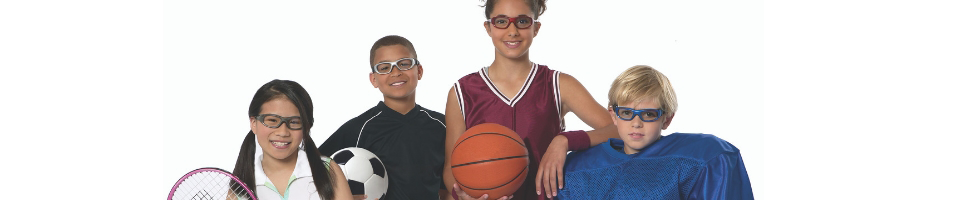
Kids can be very indecisive when it comes to sports. They want to be a basketball player one day and then a skier, the next. This makes it difficult to choose the right pair of sports glasses for a kid and might even make you wonder, “Are sports eyewear necessary for my child?”. Well, we are here to answer that question for you. Keep reading!
Learn more